
How to choose a remote-control lawn mower
Compare operator-controlled mowers for slope, terrain, reach and safe operation.
The quick answer
A remote-control mower makes sense when you want to steer the cut yourself from a safer or more comfortable position. Check the slope rating, visibility, battery runtime, cutting width and recovery routine for your property. It does not provide unattended mowing.
Choose remote control for the right reason
Remote operation is useful when a mower is too heavy or the ground is too steep for a walk-behind unit. You remain responsible for each pass and the mower does not map the yard or follow an unattended schedule. If hands-off automation is your priority, compare autonomous robotic mowers instead.
Match slope ratings to the real ground
Manufacturers may specify slope as a percentage or degrees. Those are different measurements. Compare the exact model’s working and boundary limits with the steepest patch, then account for wet grass, loose soil, roots and turns. Keep a clear view and follow the manual’s guidance for operating across and along slopes.
Plan the operating position
The remote control helps you stay away from the deck, but you still need a clear view of the work area and a safe place to stand. Check range, signal conditions and how the controls stop or reverse the machine. Keep people, pets and loose objects away from the cutting area.
Compare runtime and service routine
A wide deck can cover open ground quickly, while battery capacity and cutting conditions affect how much work fits in one session. Check charging time, battery replacement, blade care, grass collection options and transport weight. If you need to move the machine between isolated areas, include that effort in the decision.
Your questions, answered.
Does a remote-control mower mow on its own?
No. An operator controls it during the cut; it is not an unattended scheduling robot.
Can remote-control mowers handle steep ground?
Some are designed for slopes, but compare the exact manufacturer rating with your terrain and operating conditions.
What safety features should I check?
Read the manual for stop controls, range, operating position, slope use and recovery instructions before starting.
Further reading & sources
Put the advice into practice.
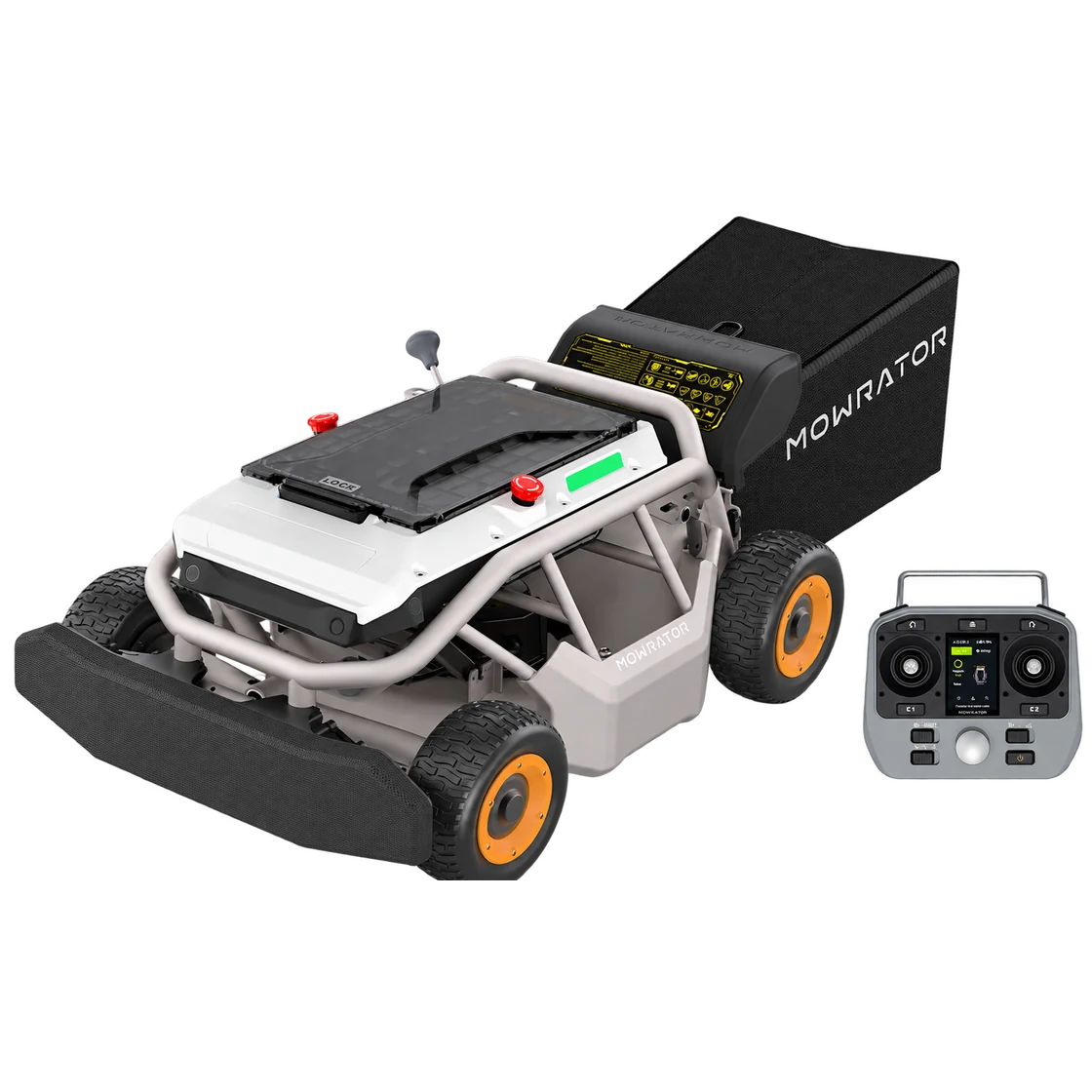
Mowrator EU S1 Leaf & Lawn 4WD 12Ah 75% Slope
Operator-controlled mowing for demanding ground and steep slopes.
Best for EU owners who want to mow rough or steep terrain while steering the machine remotely
Read the review