
Slope ratings explained: percent, degrees and what your mower can really climb
Why a 45° slope is 100%, how to measure the steepest part of your lawn, and how to read a robot mower’s slope rating.
The quick answer
Slope ratings are given either in percent or degrees, and they are not the same scale. Percent is rise divided by run, times 100, so a slope that rises 1 meter over 1 meter of ground is 100% but only 45°. Measure the steepest section your mower must work on, convert it to the unit the manufacturer uses, and leave a margin: a rating is a maximum under good conditions, and wet grass, loose soil and boundary edges all reduce grip.
Slope converter
Enter a percent, an angle, or a rise over a run.
Percent and degrees are different scales
Percent grade measures how much the ground rises for every 100 units you travel horizontally. A 30% slope rises 30 cm over 1 m of level distance. Degrees measure the angle between the slope and level ground. The two are linked by trigonometry (percent equals the tangent of the angle, times 100), and the relationship is not linear, so doubling the degrees more than doubles the percent.
This is why spec sheets can look confusing. A mower rated for 45% sounds close to one rated for 45°, but 45° is 100%, more than twice as steep.
| Degrees | Percent | What it feels like |
|---|---|---|
| 10° | 17.6% | A gentle lawn slope; easy to walk |
| 15° | 26.8% | Noticeable; a typical robot mower comfort zone |
| 18° | 32.5% | A common entry-level robot mower maximum |
| 20° | 36.4% | Steep for most lawns; a push mower gets hard work |
| 25° | 46.6% | Steep bank; all-wheel-drive territory |
| 35° | 70% | Very steep; specialist mowers |
| 45° | 100% | Rise equals run |
| 50° | 119.2% | Embankment; remote-control slope mowers |
How to measure the steepest part of your lawn
You do not need surveying tools. The simplest reliable method uses a straight board or spirit level and a tape measure.
- Find the steepest section the mower will actually drive on, including the boundary edge.
- Lay a straight board of known length (for example 1 m) on the slope, pointing straight downhill.
- Lift the low end until the board is level, checking with a spirit level or a level app.
- Measure the gap between the low end of the board and the ground. That is the rise.
- Divide the rise by the board length and multiply by 100 for percent. A 25 cm rise over 1 m is 25%.
Smartphone level apps can read the angle directly: lay the phone on the board along the slope. Take several readings and use the steepest.
Reading a manufacturer’s slope rating
Treat a slope rating as the maximum the mower can manage in good conditions, not a figure to plan right up to. Grip depends on grass density, moisture, soil and wheel design. Many manufacturers also list a separate, lower limit for slopes at the boundary, because turning on a slope near an edge is where a mower is most likely to slide.
Manufacturers sometimes round conversions differently, so a model listed as 42% and 22° is not a contradiction worth worrying about (22° is 40.4%). What matters is that your measured slope sits comfortably inside the figure.
Matching the slope to the right machine
Most two-wheel-drive robot mowers are designed for gentle to moderate lawns, often up to around 18° to 25°. All-wheel-drive robot mowers push that further. Beyond that, the safest option is often a remote-control slope mower that you operate from a distance, because steep banks are exactly where an unattended machine needs the most margin.
If a single steep bank is the only problem, consider mowing that area separately rather than buying a more expensive robot for the whole lawn.
Your questions, answered.
How do I convert slope percent to degrees?
Degrees equals the arctangent of (percent divided by 100). For example, 50% is arctan(0.5), about 26.6°. Use the converter on this page for any value.
Is a 100% slope vertical?
No. A 100% slope rises one unit for every unit of horizontal distance, which is 45°. A vertical wall would be an infinite percentage.
What slope can a robot lawn mower handle?
It depends on the model. Many handle up to around 18° to 25°; all-wheel-drive models go steeper. Always check the exact model’s rating and its boundary-slope limit.
Should I buy a mower rated exactly for my slope?
Leave a margin. Ratings are maximums under good conditions, and wet grass or loose ground reduce grip.
Ready to choose?
Robots we recommend in robot lawn mowers
See all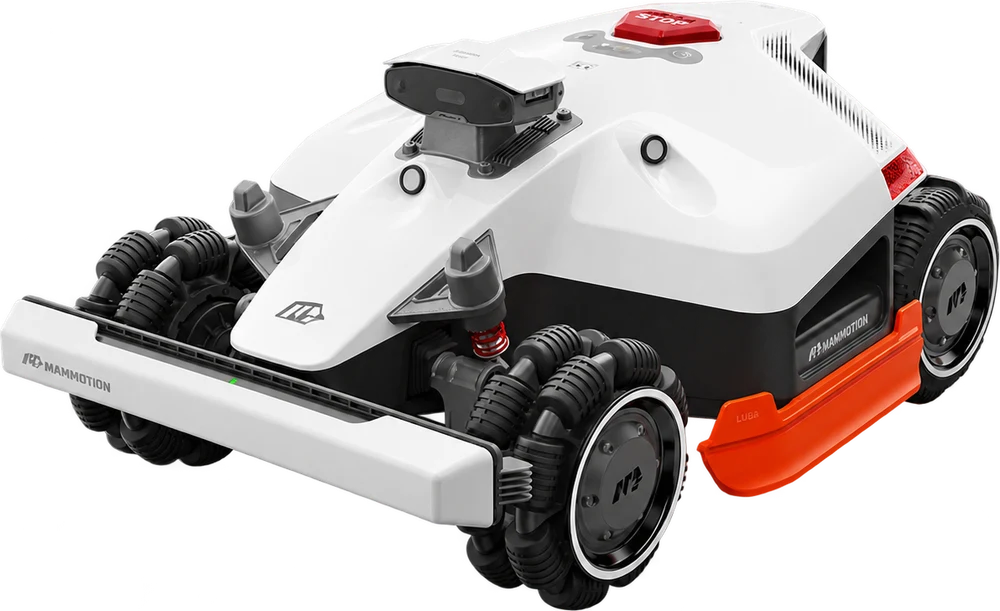
Mammotion LUBA 2 AWD
All-wheel drive for a more hands-off lawn.
Best for Uneven lawns and multi-zone gardens
Read the review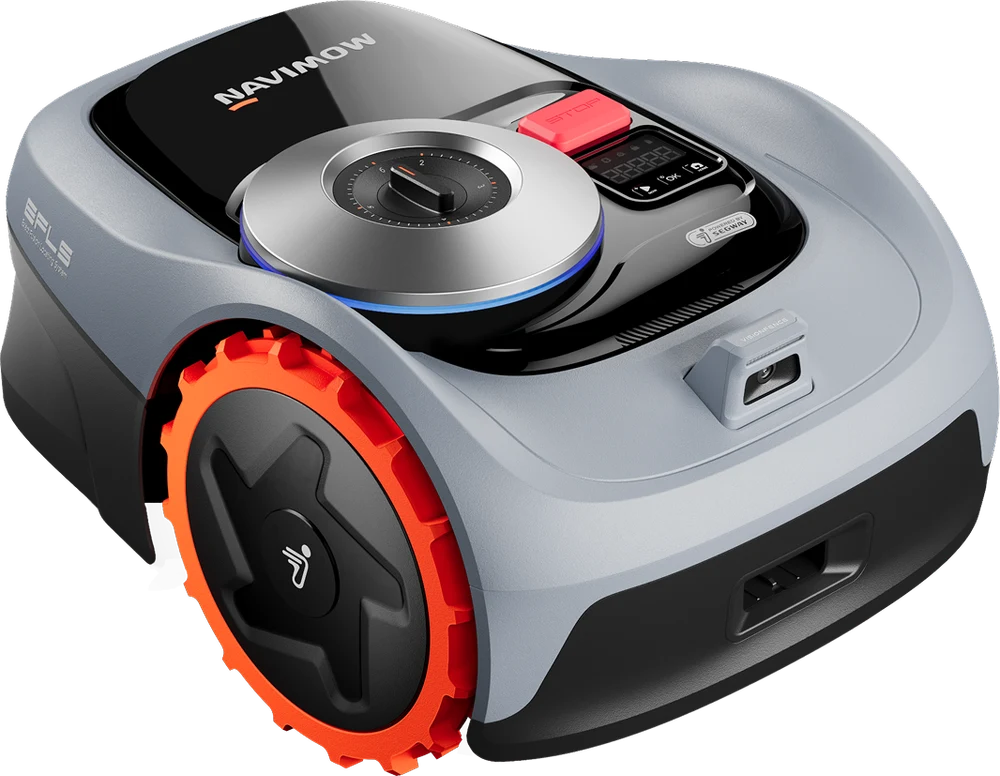
Segway Navimow i105
A considered starting point for smaller lawns.
Best for Smaller lawns within its rated coverage
Read the review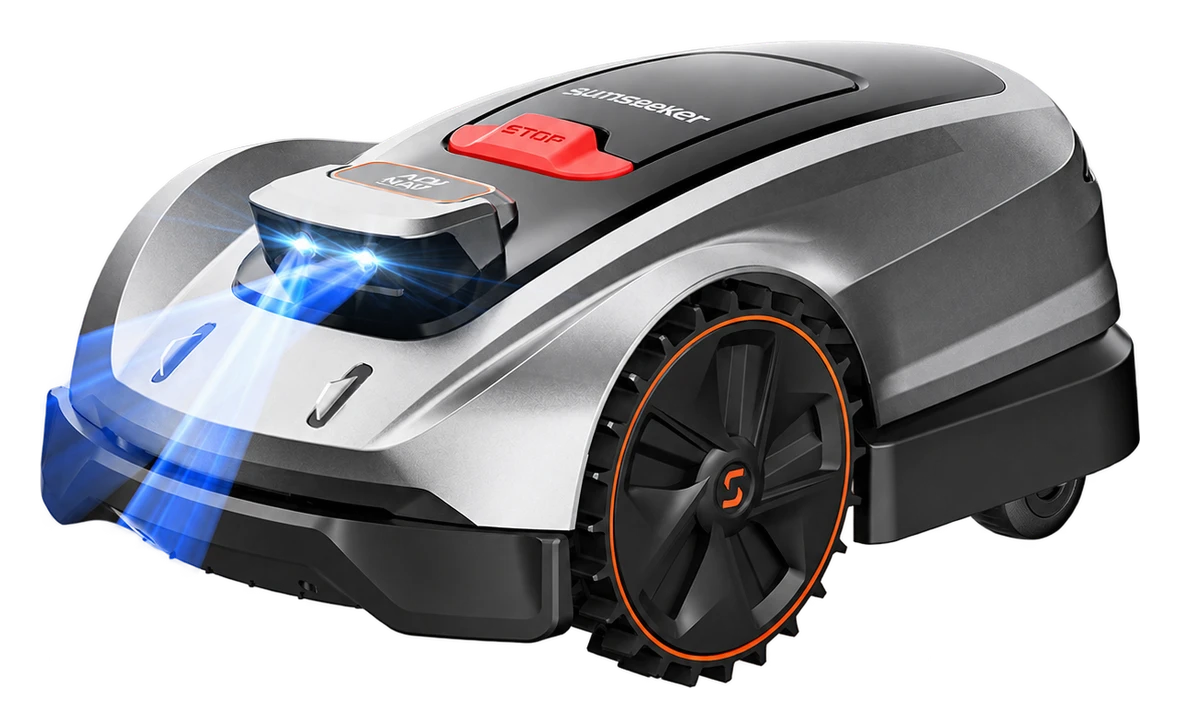
Sunseeker X3 Plus
Wire-free mowing for a more manageable weekend.
Best for Suburban lawns up to 0.3 acre with suitable navigation and dock placement
Read the review